Sponsored by

THE WARMUP
Welcome to Volume I, Edition X of The Sunday Back Page.
This is your Sunday morning sports section — built for the inbox and made for independent creators. Every week, the best sports writing, podcasting, and storytelling from people who own what they build. No institutions. No legacy outlets. No algorithms deciding what you see. Just great work. Every Sunday morning.
The Lineup
You don't need to be technical. Just informed.

Most AI newsletters are written for engineers. This one isn't.
The AI Report is read by 400,000+ executives, operators, and business leaders who want to know what's happening in AI — without wading through code, jargon, or hype.
Every weekday, we break down the AI stories that matter to your business: what's being deployed, what's actually working, and what it means for your team.
Free. 5 minutes. Straight to the point.
Join 400,000+ business leaders staying ahead of AI — without the technical overwhelm.
THE LEAD
📰 The last call

A microphone was dropped in the Bronx this week.
If you are a New Yorker, whether you are a Yankees fan, a Mets fan or a fan of another club, John Sterling evoked something special in you.
Since the mid-1990s, the Yankees have been the show of shows in New York City, and Sterling was their brash emcee. This was Broadway, and Sterling announced the best show in town. Every night. And he didn't miss a night. He called 5,060 straight games from 1989 to 2019.
His home-run calls (It is high… it is far… it is gone…). His bombacity. He understood the spectacle, and he helped make you a part of it.
The rule in broadcasting school is balance. Sterling never went to that school. He was a homer, and homerism was at the top of the job description — and nobody did it better.
Sterling wasn't the best baseball play-by-play man. No one mistook him for Vin Scully. He was a showman. And that was exactly what the 1990s Yankees dynasty, and the sustained success the team enjoyed for the subsequent decades, needed as its voice.
He was Ed McMahon — the warm-up man, the sidekick, the laugh — while the Yankees played Johnny Carson every night. The nightly guests were the opposing teams.
Sterling was so ingrained in Yankee culture that every time a rookie hitter got the call-up, or a veteran was acquired via free agency or trade, countless hours were spent on sports talk radio guessing what the player's personalized home-run call would be.
Close your eyes and take in some of my favorites:
Robbie Cano. Dontcha know!
It's a Thrilla! By Godzilla!
El Cap-i-tan!
The best may have been where there were back-to-back home runs: "Back-to-Back and (down an octave) belly-to-belly!"
Covering the Yankees as a reporter or columnist also meant that you were part of the clique that included Sterling. You could tell over the years what his friendship meant to anyone who touched the press box or anywhere else close to Yankeedom.
His calls hit them high. Hit them far. The booth is empty now. And his calls are now gone.
— Ian Powers
THE QUESTION
❓ Sunday trivia
Who was the first player to dunk in a WNBA game?
A) Sylvia Fowles
B) Candace Parker
C) Lisa Leslie
D) Brittney Griner
See answer below 👇
THE READS
📖 The best things we read this week
Each week, we curate 4-6 of our favorite reads from this week. The selections came from our own curation and from dozens of submissions by our readers. Thank you so much, and keep them coming.
The Joy Series: Hometown Announcers | By Joe Posnanski | JoePosnanski.com
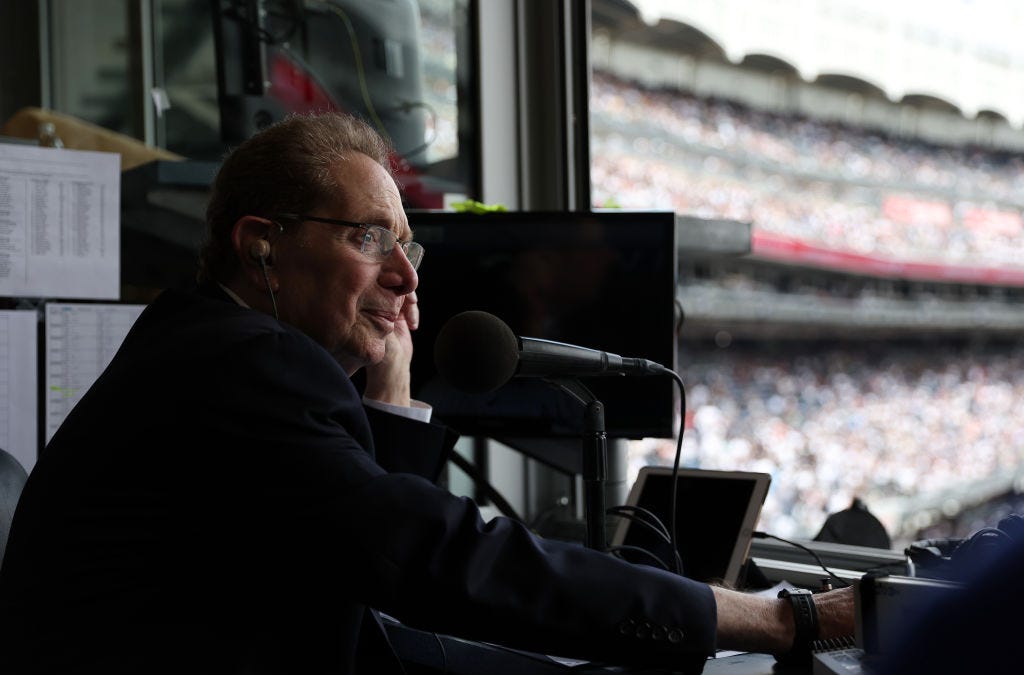
Our take: Joe Posnanski is one of the best baseball writers alive, and if you need proof of concept for what an independent sports writer can build, look no further — he runs one of the top five sports Substacks. He isn't a Yankees fan. He'll tell you that upfront. But Sterling's death sent him back to something true about hometown announcers, that their style was never the point. He grew up with Herb Score in Cleveland, a man who forgot to give the score for five or six innings at a stretch. Didn't matter. He was theirs. Posnanski uses that lens to get at why Sterling meant what he meant, even to people who spent decades rooting against him.
How Twitter made insiders the stars of sports journalism | By Brian Moritz | Sports Media Guy

Our take: Moritz is a former sports writer turned college professor who researches the industry with the rigor of an academic and the instincts of someone who actually worked the beat. This piece traces how Twitter didn't just change sports journalism — it reordered its entire hierarchy. The insider replaced the columnist as the star, and Moritz makes the case that it was never really about talent. It was about technology. Required reading for anyone trying to understand how the business got here.
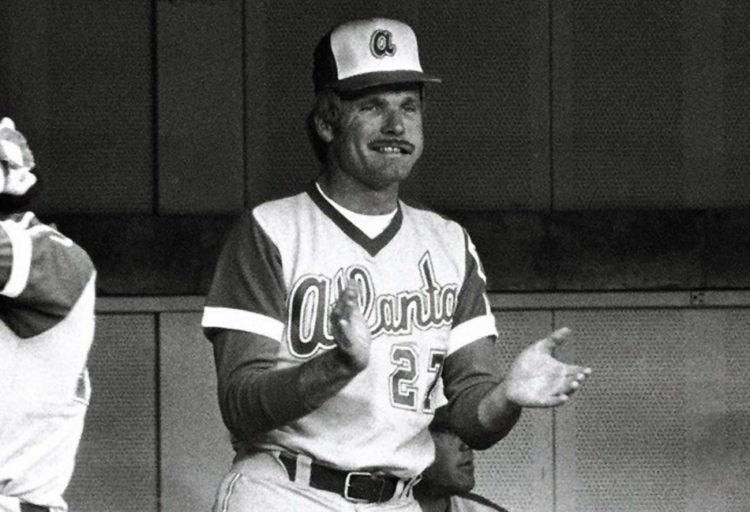
Our take: Tratner digs into the sports associations that got less ink in the Turner obituaries: the America's Cup win, the Goodwill Games, the one game he managed the Braves. Turner skippered Courageous to the 1977 America's Cup title — the same year he benched his own manager and took over the dugout himself. The man contained multitudes.
From an after-dinner game invented by upper-class Victorians in England to China’s national sport, ping-pong has come a long way | By Duncan MacKay | Zeus Files

Our take: It started as an after-dinner game for Victorian aristocrats who used champagne corks as balls. The sound they made when paddled around gave the game its first name — whiff-whaff. Then came celluloid balls, a new sound, and eventually ping-pong. Then a trademark dispute with a board game company forced the sport to call itself something else entirely. MacKay traces the full arc — from English drawing rooms to Nixon's China trip to 850 million fans worldwide — and makes you realize the game hiding in your basement rec room has one of the stranger origin stories in sports history.
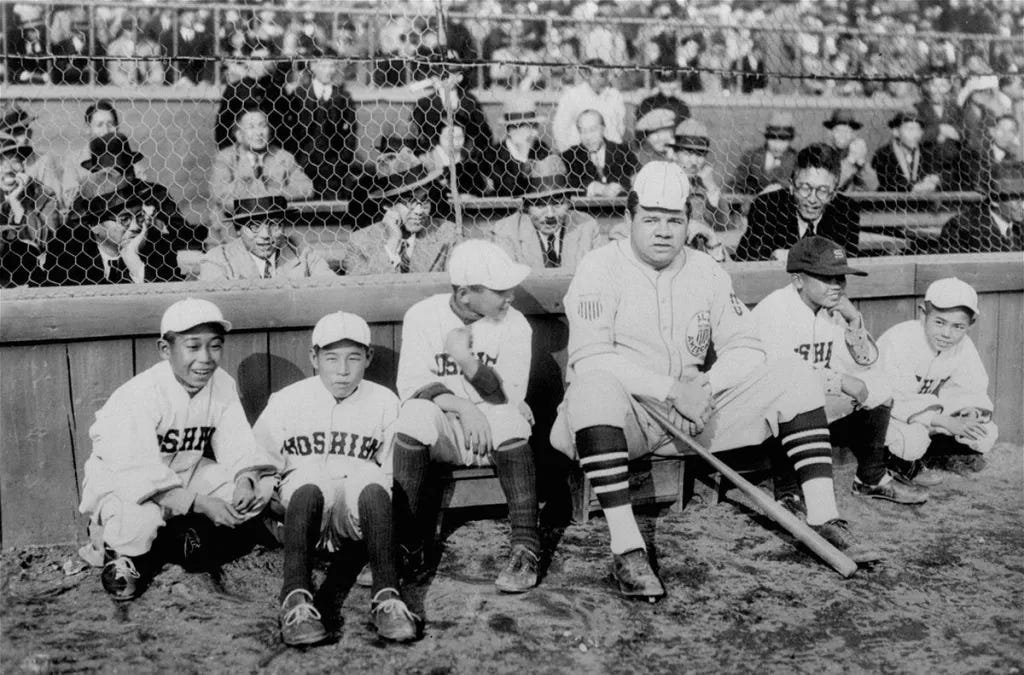
Our take: Baseball arrived in Japan in 1872, carried there by an American English teacher named Horace Wilson. Twenty-four years later, a Tokyo high school team beat a squad of American and British residents 29-4 — then beat a U.S. Navy team assembled for a rematch by nearly the same margin. The piece traces the full arc from that moment through Babe Ruth's 1934 tour, when half a million people lined the streets of Tokyo to catch a glimpse of him, to the Shohei Ohtani era, when Japan averaged nearly as many viewers per World Series game as the United States. The sport crossed an ocean and became something Japan made entirely its own.
THE LISTENS
🎧 The best podcasts we heard this week
Each week, we curate 1-2 of our favorite podcasts. The selections came from our own curation and from submissions by our readers. Thank you so much, and keep them coming.
Q&A: Which LIV Players Could Return to PGA Tour, LPGA Pro-Am Winner, Money in the Women's Game | Any Given Monday

Our take: Ryan French built Monday Q Info into the definitive home for Monday qualifier coverage — the grind of the mini-tours, the bubble players, the guys one good week from a Tour card. This Q&A episode has a different wrinkle: French just won an LPGA Pro-Am, which gives him an excuse to answer listener questions about LIV players the PGA Tour would actually want back, Saudi money moving into the women's game, and how course conditions separate a field in ways the box score never shows. Thirty-two minutes, no filler.
2026 WNBA PREDICTIONS | Inside the Cylinder | WNBAnow
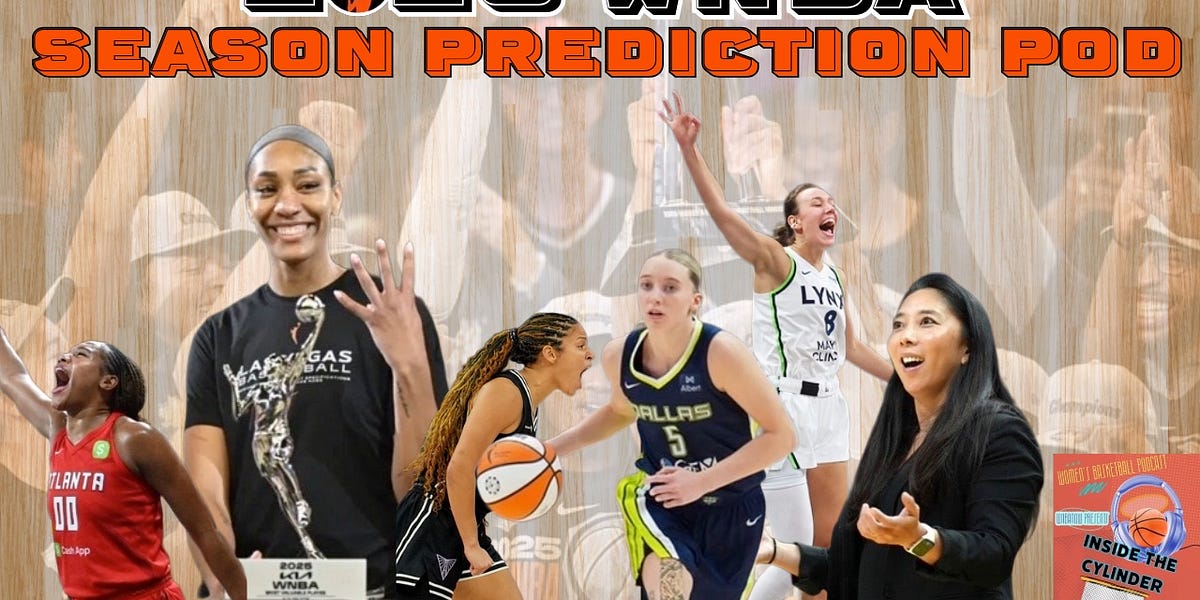
Our take: The WNBA's 30th season tips this weekend — 15 teams, two expansion clubs in Toronto and Portland, and a league that has spent the last few years becoming impossible to ignore. James at WNBAnow runs through the full slate of predictions: playoff seedings, award races, champion. If you've been meaning to get more familiar with the league before the season gets away from you, this is the most efficient way to get up to speed — one episode, every major storyline covered.
THE WATCH
📺 The best videos we viewed this week
Each week, we curate 1-2 of our favorite videos. The selections came from our own curation and from submissions by our readers. Thank you so much, and keep them coming.
Forget What You Knew About These Pitchers | Lance Brozdowski
Our take: Brozdowski is a player development analyst for Marquee Sports Network — the Cubs' RSN — and one of the sharpest independent baseball video analysts working today. His channel is built on original scripted essays: pitching mechanics, swing trends, MLB data. No repurposed podcast audio, no reaction content. Just someone who has clearly watched more Baseball Savant footage than most people in the industry and knows how to show you what he found. Bookmark the channel. You'll keep coming back.
THE ROSTER
📋 Some follows to note
We want to celebrate as many independent creators on The Sunday Back Page as possible. Here are all the people who either submitted their work for consideration or were considered independently this week. Many of these creators deserved a place in this newsletter, and we hope they continue to submit their work. Please keep them on your radar.
T.J. Highley | Sando | The Rhythm Edge | Eric Katz | Josh Liddick | The Secret Tour Caddy | Nate Kosher | Adam Steinmetz | Will Chase | Jason Clewes | Jabar Maiyaki | Baseball Scoops | Max Lombardia | Will Eisenberg
It’s the first weekend of the WNBA season, so here are some WNBA follows to bookmark:
Storm Chasers | The WNBA Notebook | Miss Tee | She Got Game | Women’s Basketball Roundup | Layup Lines
Want to see your independent publication featured here? Let us know. There are hundreds more baseball Substacks out there. Give me a shout!
THE ANSWER
❓ Sunday trivia answer
C) Lisa Leslie | Leslie's 2002 dunk with the Los Angeles Sparks was a watershed moment. At a time when many fans doubted whether dunks were even possible in the women's game, she delivered the kind of high-flying play people had only associated with the men's side. That one jam became a permanent reference point — in highlight reels, in debates about the evolution of women's basketball, in how players, coaches, and fans came to see what was possible.
📬 Submit Your Work
Have a piece, podcast, or video you'd like considered for a future edition of The Sunday Back Page? Submit by Thursday at midnight ET
