In partnership with

THE WARMUP
Welcome to Volume I, Edition IX of The Sunday Back Page.
This is your Sunday morning sports section — built for the inbox and made for independent creators. Every week, the best sports writing, podcasting, and storytelling from people who own what they build. No institutions. No legacy outlets. No algorithms deciding what you see. Just great work. Every Sunday morning.
Write docs 4x faster. Without hating every second.

Nobody became a developer to write documentation. But the docs still need to get written — PRDs, README updates, architecture decisions, onboarding guides.
Wispr Flow lets you talk through it instead. Speak naturally about what the code does, how it works, and why you built it that way. Flow formats everything into clean, professional text you can paste into Notion, Confluence, or GitHub.
Used by engineering teams at OpenAI, Vercel, and Clay. 89% of messages sent with zero edits. Works system-wide on Mac, Windows, and iPhone.
THE LEAD
📰 When billionaires play, fans pay

Major League Soccer is having a moment. Just not the one you think.
Born out of the deal with FIFA to host the 1994 World Cup, Major League Soccer has shown plenty of warts and successes through its 31 seasons, and, in less than two months, the world's biggest sporting event is back on the continent for the first time since then.
According to The Economist, soccer has eclipsed baseball as the third most popular sport in the United States behind American football and basketball. That popularity likely has more to do with European soccer leagues than it does with MLS, but MLS is gaining traction in its own right.
There are 30 teams with imminent plans to expand to 32. There's also the specter of that larger-than-life little fella playing for defending champion Inter Miami.
But what truly indicates how much MLS has arrived is the number of billionaires buying into the league and the billionaire games they play.
Some compare the MLS ownership model to a Ponzi scheme. Each new franchise must pony up an escalating franchise fee to join the league, and the current franchises, whether they are struggling financially or not, get to share the revenue from those fees. No wonder the league has added 11 clubs since the beginning of the 2015 season.

Supporters groups and the culture surrounding them are arguably the best in sports. The fans who built that culture are the ones who pay when billionaires start moving the pieces around.
That's what happened in Vancouver this week. The owners want to sell the Whitecaps, who reached both the MLS Cup and CONCACAF Champions League finals last season. The lease at BC Place is up, and the league is allegedly angling to move the club to Las Vegas.
The last time this played out, Anthony Precourt bought the Columbus Crew and tried to relocate them to Austin, Texas. The city fought back using the Art Modell Law — enacted after Modell notoriously moved the Cleveland Browns to Baltimore — and kept the club under new ownership. Precourt later ponied up for his own franchise, Austin FC.
Vancouver doesn't have that law. FIFA's congress met there this week and was greeted by protesters. BC Place will host multiple World Cup games this summer.
The league was born from a World Cup. Thirty-one years later, the Cup is back — and the fans are in the street.
— Ian Powers
THE QUESTION
❓ Sunday trivia
Which NBA team was the lowest-seeded team to win the NBA championship?
A. 1969 Celtics
B. 1973 Knicks
C. 1977 Trail Blazers
D. 1995 Rockets
See answer below 👇
THE READS
📖 The best things we read this week
Each week, we curate 4-6 of our favorite reads from this week. The selections came from our own curation and from dozens of submissions by our readers. Thank you so much, and keep them coming.

Our take: Davis, a big voice in MLS and U.S. soccer circles, has been tracking the Vancouver situation and puts the Whitecaps crisis in its proper context: MLS isn't trying to save a struggling market, it's looking to open a new one. The piece traces how the league spent years selling soccer's supporter culture as its identity — then built an ownership model that treats that culture as disposable. Required reading if The Column left you wanting more.
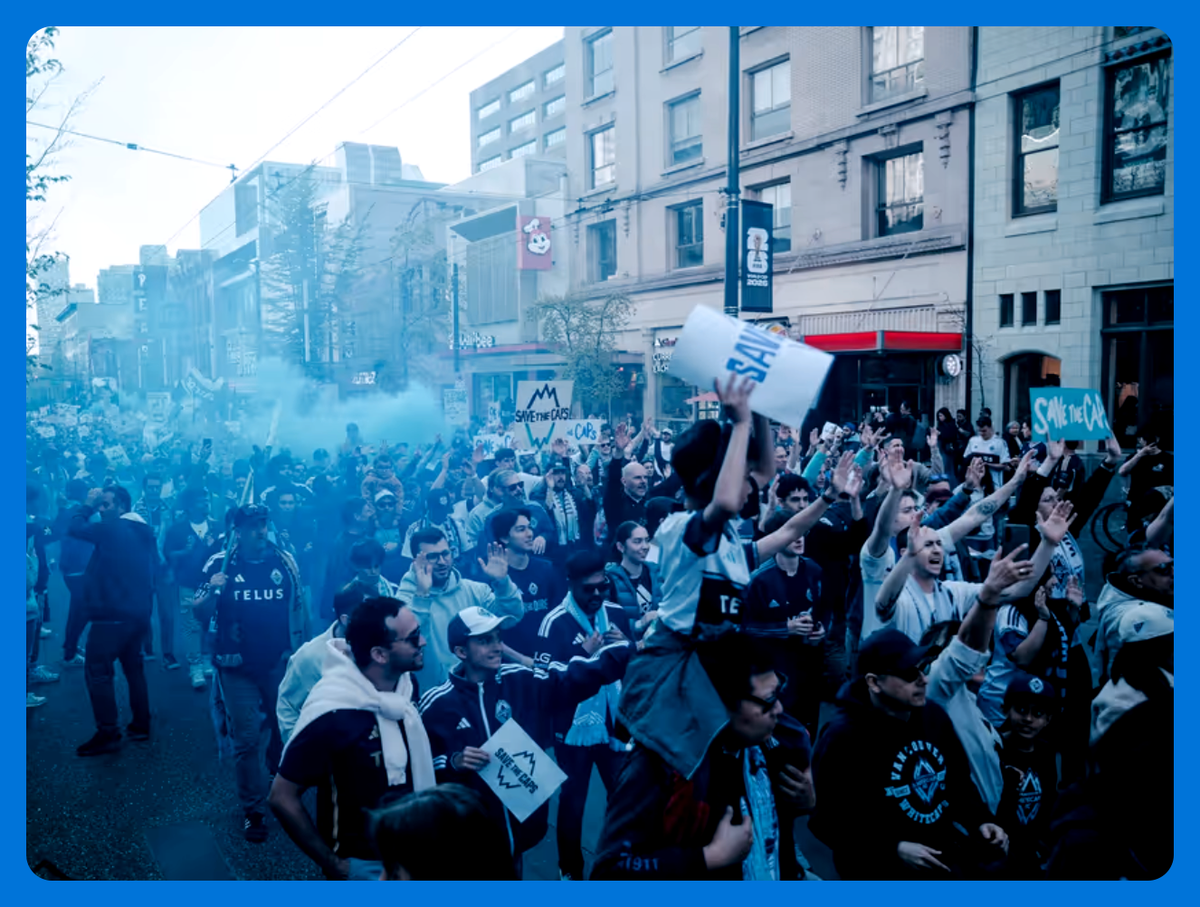
Our take: Arace covered the Columbus Crew saga from inside Ohio and watched Don Garber describe Columbus — the spiritual home of the USMNT — as "inconsequential." Now he's watching the same playbook run in Vancouver, right down to the language. "Structural challenges." "Stadium economics." "No viable offer." He knows what those words mean. So do the fans in the street.
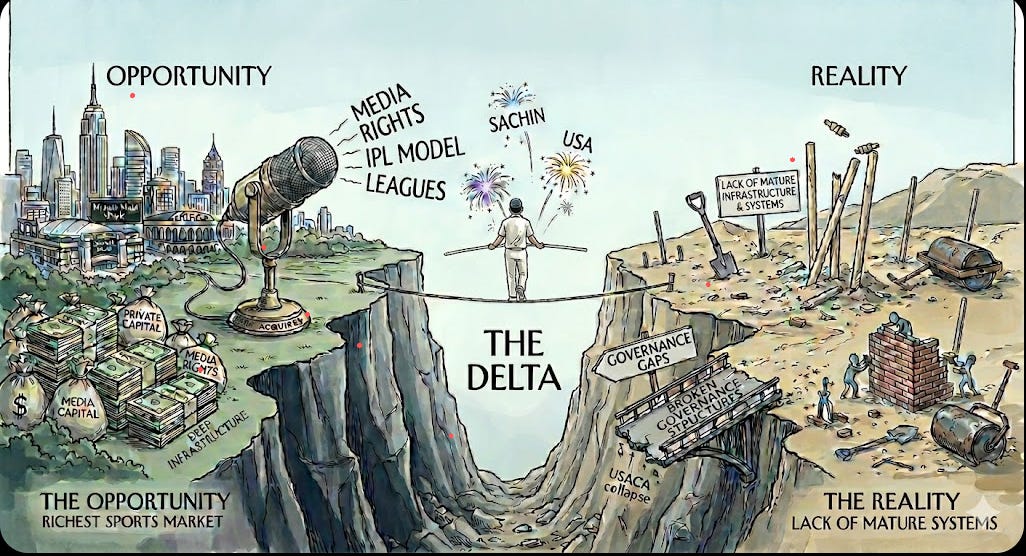
Our take: Fitzgibbon helped make Cricket All-Stars happen in 2015, watched 74,000 people show up across three MLB stadiums, and has been building around the North American cricket market ever since. His read: this has never been a demand problem. The Pakistan v India match at the 2024 T20 World Cup in Long Island was oversubscribed by more than 200 times for the ticket ballot. The problem is coordination — governance collapses, infrastructure gaps, and institutions that keep resetting the clock just as momentum builds. One of the more clear-eyed pieces you'll read on where the sport actually stands heading into LA28.

Our take: Three case studies on what happens when sport and fashion get the fit right: BOSS taking over the Australian Open's official outfitter role from Ralph Lauren in 2027, LaLiga staging a retro matchday at Madrid Fashion Week, and Belgium's World Cup away kit built around René Magritte — collar and all. Sharp framing for anyone thinking about sponsorship strategy heading into a World Cup summer.
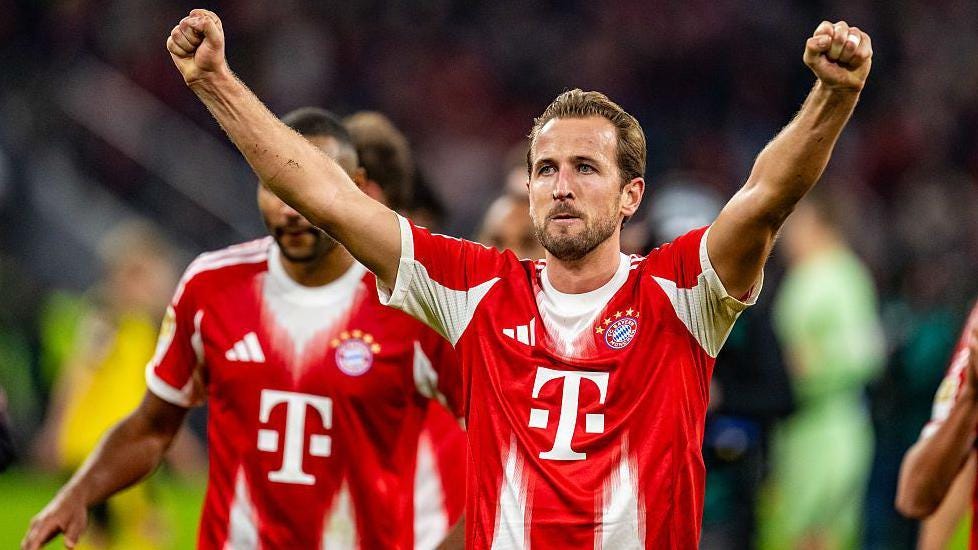
Our take: Harry Kane left Tottenham with every scoring record Spurs had and zero trophies. By April 2026, he had 51 goals for Bayern in a single season. Murray uses Kane as the entry point for a broader argument: change the environment, reset the narrative, and the performance follows. Jokić, Kevin Pietersen, Johnny Sexton — the pattern holds across sports. Worth the read heading into a World Cup summer.
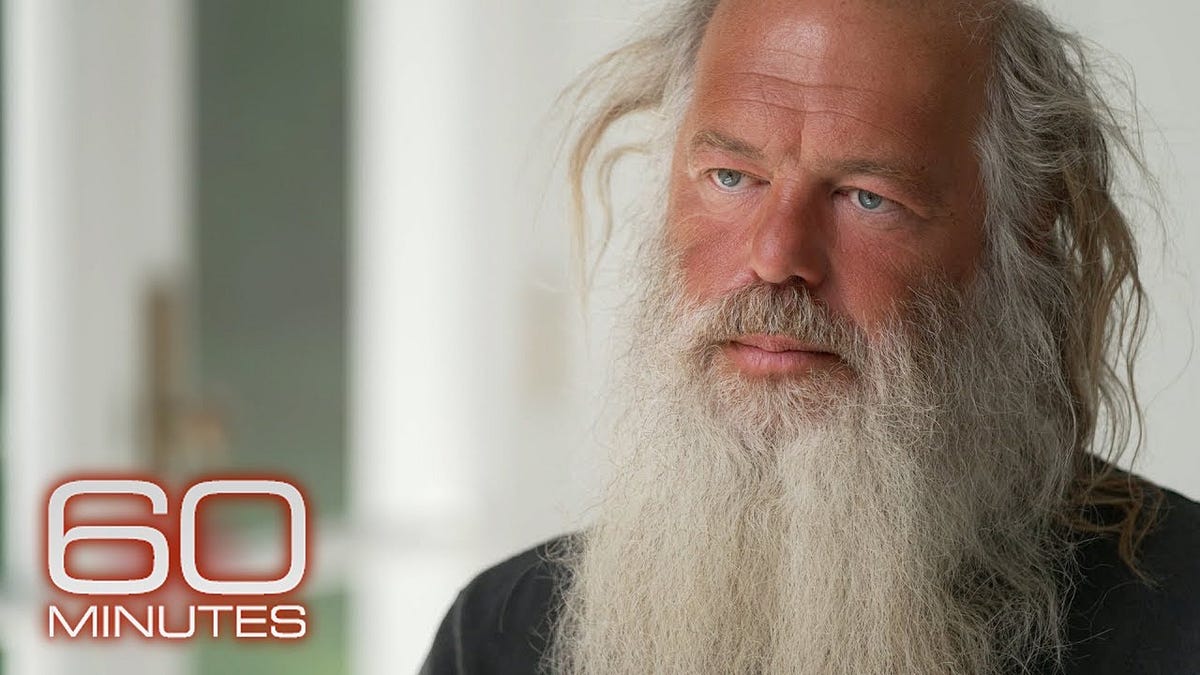
Our take: Strauss tweeted that sports team accounts doing Gen Z lingo are cringe. People told him he was too old to judge. The actual piece is about something bigger: the cultural fear of sounding old has become a mechanism for suppressing legitimate taste. Nobody personally defends the Chargers saying "mf fr" — they just insist some younger, cooler person must love it. Rick Rubin makes an appearance. So does a Nike ad campaign history that aged exactly the way Strauss said it would.
THE LISTEN
🎧 The best podcasts we heard this week
Each week, we curate 1-2 of our favorite podcasts. The selections came from our own curation and from submissions by our readers. Thank you so much, and keep them coming.
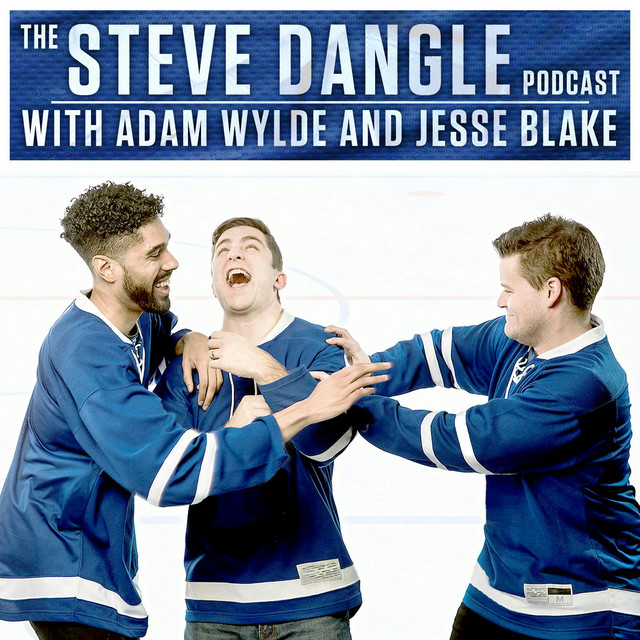
Our take: The Oilers played their best game of the playoffs. The Penguins and Bruins are both somehow still alive. Montreal and Tampa went at it. Vegas tied it up with Utah. Steve Dangle and the crew cover the full first-round landscape here, but the anchor is the news that John Chayka and Mats Sundin are taking over hockey operations in Toronto — which, if you know anything about the Leafs, lands about the way you'd expect.
THE WATCH
📺 The best videos we viewed this week
Each week, we curate 1-2 of our favorite videos. The selections came from our own curation and from submissions by our readers. Thank you so much, and keep them coming.
Our take: Sixteen teams. One thing learned about each. The Deep 3 is an independent NBA trio — no network, no affiliation, no corporate cushion — and this is them at their best: moving fast, being funny, and actually saying something about every first-round series. Good playoff viewing if you want analysis that doesn't sound like it was cleared by a PR department.
THE ROSTER
📋 Some follows to note
We want to celebrate as many independent creators on The Sunday Back Page as possible. Here are all the people who either submitted their work for consideration or were considered independently this week. Many of these creators deserved a place in this newsletter, and we hope they continue to submit their work. Please keep them on your radar.
5 Boro Baseball | Kwame Twumasi-Ankrah | The Playbook Post | Jesse Gerritsen | Will Colahan | jeshal | Michael Ham | Baseball Scoops | Sando | Will Eisenberg | John | Shubi Arun | Steven S. Neff | Jason Krump | The Secret Tour Caddy | GeoSport | The Full Scope | Clare McEwen | The SafeSport Illusion | Inside the Baseline | Heart of a Fan | Mike Gross | Mitch Woods | The Full Scope
Want to see your independent publication featured here? Let us know. There are hundreds more baseball Substacks out there. Give me a shout!
THE ANSWER
❓ Sunday trivia answer
D. 1995 Rockets Houston entered the playoffs as the 6 seed in the Western Conference — the lowest seed ever to win an NBA championship. They had won the title the year before as the top seed, but nobody remembers that run. They remember Hakeem, Drexler — his college teammate at Houston and a midseason trade acquisition — and the upset of the Shaq-Penny Magic.
