
THE WARMUP
Welcome to Volume I, Edition III of The Sunday Back Page.
This is your Sunday morning sports section — built for the inbox and made for independent creators. Every week, the best sports writing, podcasting, and storytelling from people who own what they build. No institutions. No legacy outlets. No algorithms deciding what you see. Just great work. Every Sunday morning.
Note: This week's email came from Beehiiv. That's where Sunday Back Page emails will live going forward. If you prefer Substack, every edition is still available on the website and in the app — just update your notification settings there.
THE LEAD
📰 The city that gave away the game

I’ve lived in and around New York City my whole life. When I think of March Madness, I think of New York’s role in creating it.
Then, I lament how the city that gave the country college basketball spent the next 75 years watching everyone else play it.
Before Lew Alcindor went to UCLA, before the best players in New York started catching buses out of town, this city didn’t just produce college basketball. It owned it.
Teams came from everywhere to play in New York, which meant playing against New York — against kids who learned the game on asphalt, in gyms with no air, before crowds who’d tell you exactly what they thought of you.
For every Kansas, there was a St. John’s. For every Kentucky, a City College. For every Indiana, an NYU.
City College was the purest version of the city game and what it meant for college hoops. Free tuition. Sons of immigrants, descendants of slaves, a coaching staff that treated fundamentals as a moral position. In 1950, the Beavers won the NIT and the NCAA in the same season — the only team ever to do it.
On the night of Feb. 18, 1951, police met a train pulling into Penn Station and arrested three City College players. The corruption was nationwide — LIU, Manhattan, NYU, Kentucky, Bradley. The fallout landed hardest on New York.
Seventy-five years ago this spring, New York City lost college basketball. Not the games. The game.
St. John’s was the only major program that survived the purge.
The NCAA relocated the tournament from the Garden. First-round games limped along until 1961, then stopped entirely. CCNY eventually dropped its program. The playground and high school stars who once stayed home — who made the Holman way, the New York way, the only way — started going anywhere but here. North Carolina won the 1957 national title with mostly NYC kids. Duke then copied that approach. UCLA.
The Garden got March Madness back in 2014. Then 2017. Then 2023. It’s coming again in 2027.
The city that built the game will settle for hosting it.
— Ian Powers
THE READS
📖 The best things we read this week
Each week, we curate 4-6 of our favorite reads from this week. The selections came from our own curation and from dozens of submissions by our readers. Thank you so much, and keep them coming.
The women’s football match decided by “style points” (Oslo, 1928) | Clare McEwen | She Can Kick It
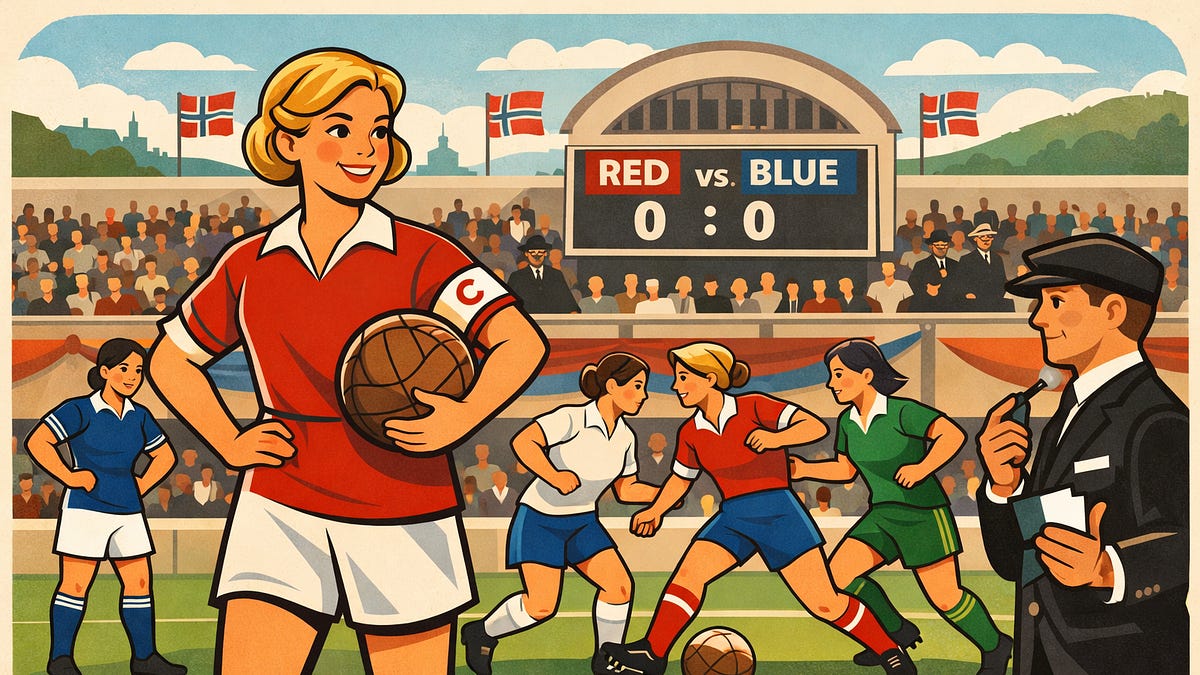
Our take: This one breaks some of the rules of The Sunday Pack Page for its publish date, but it moved us nonetheless. Clare McEwen posted a reel on She Can Kick It about a women’s football match in Norway settled by style points, and it didn’t land the way she hoped. Then a reader asked who the judges were and what they were actually scoring. That question sent her back into Norwegian newspaper archives from 1928 — and the story she came back with is worth the detour.
Great Sports Photography - A Matter of Perspective | Beauty of a Game
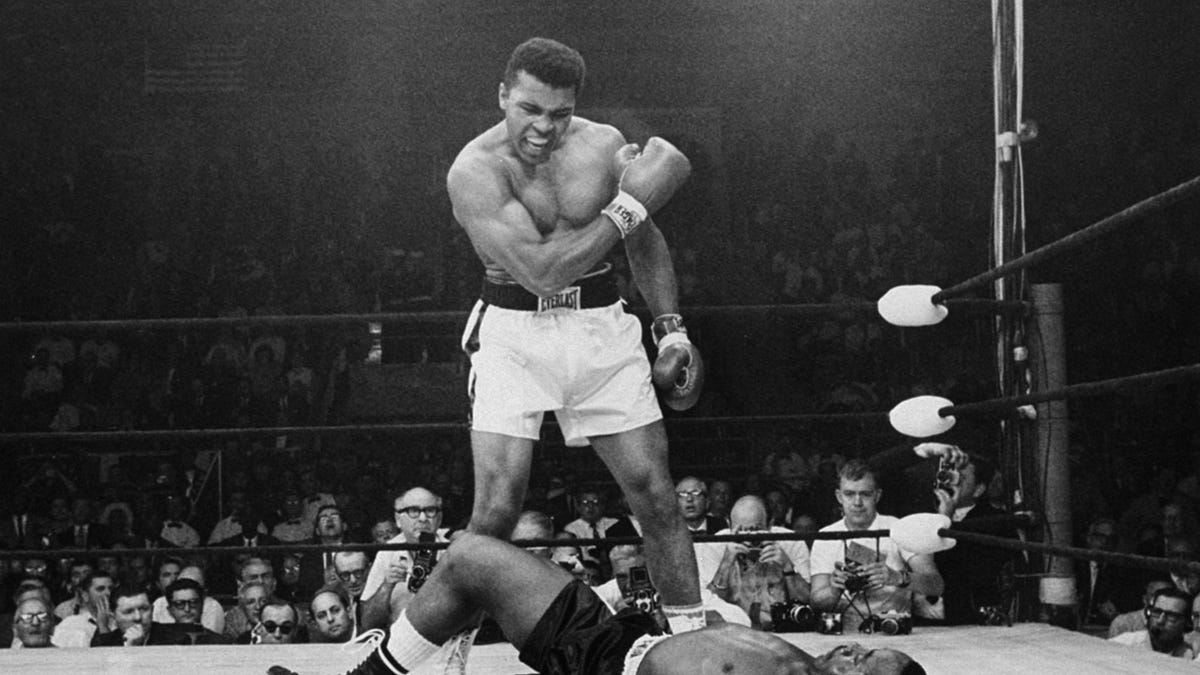
Our take: You know Neil Leifer’s photograph of Muhammad Ali standing over Sonny Liston. What Beauty of a Game wants you to know is that the senior Sports Illustrated photographer on site that night had first pick of positions — and chose wrong, leaving Leifer with the other side of the ring and what many consider the greatest sports photograph ever taken. That origin story opens a piece about what happens when multiple photographers capture the same moment from different angles: the Mantle-Aaron World Series shoot, Willie Mays on picture day with the Mets, Dr. J punishing the Bulls from two directions at once. Worth your time if you care about the images as much as the games.
The life of Lauri | SportsYarn | Between the Sidelines
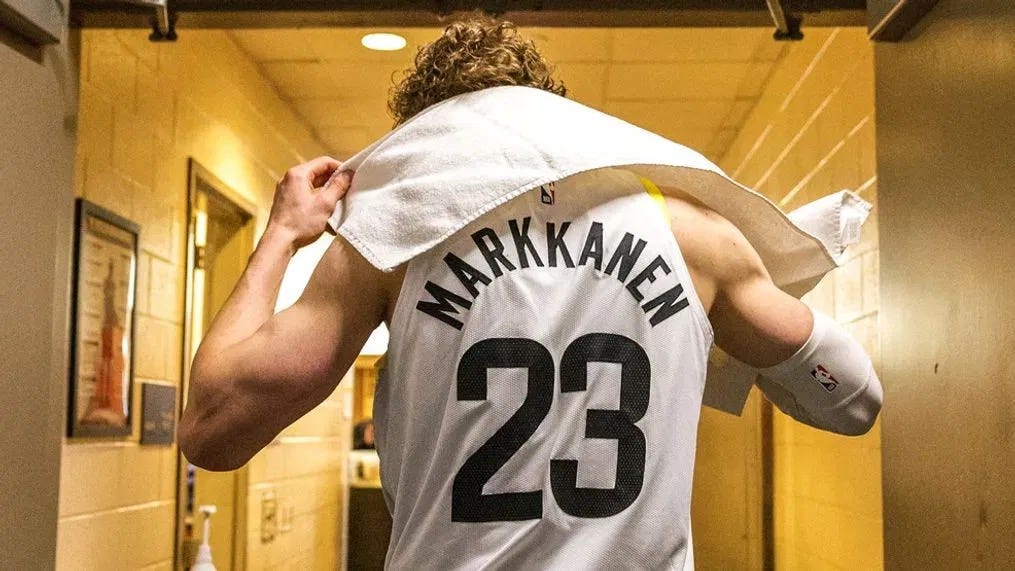
Our take: In 2023, Lauri Markkanen accepted the NBA’s Most Improved Player award at 2 a.m. via video link from an army barracks in Finland, where mandatory conscription had him training as a reconnaissance soldier. Jesse Gerritsen of SportsYarn and Sophia Prieto of Between the Sidelines team up to trace what that says about the man — the Finnish concept of sisu, the quiet efficiency he brought back to Utah, and the season that followed, in which he became the only player in NBA history to record 100 dunks and 200 three-pointers in the same year. A good profile is one where the athlete makes more sense at the end than at the beginning. This one qualifies.
Maryland is the poster child for college basketball’s volatility era | Eben Novy-Williams and Jacob Feldman | Club Sportico
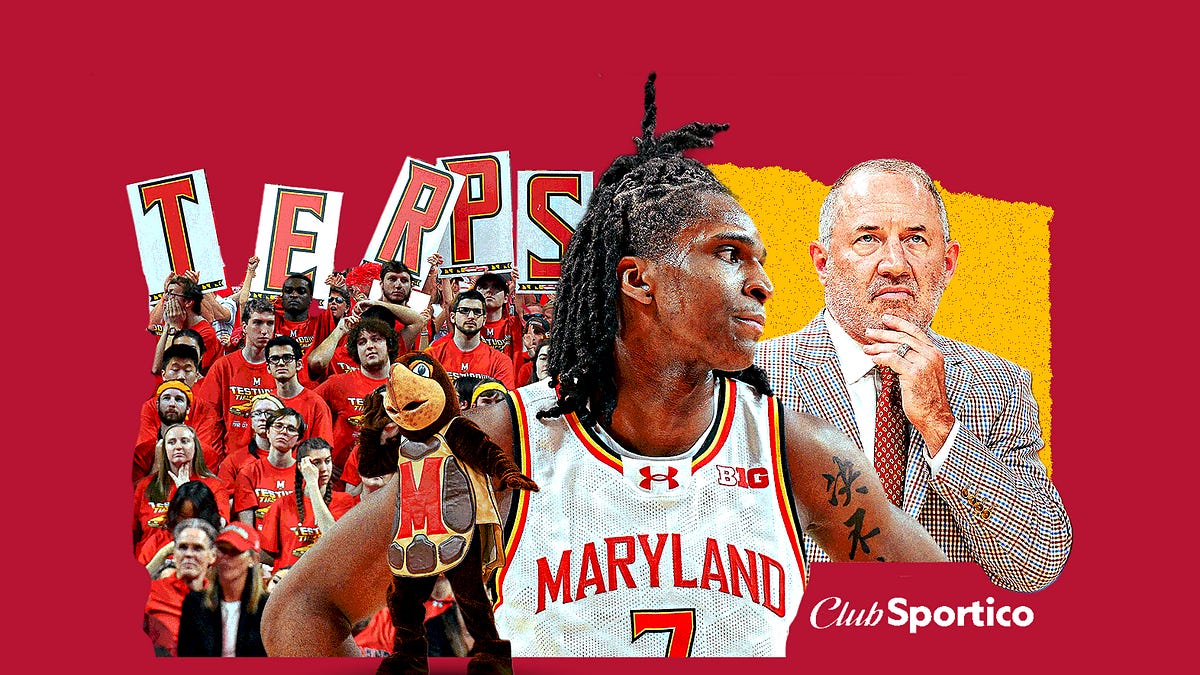
Our take: Maryland went to the Sweet 16 last year. This year they lost more than 20 games for the first time since the 1940s. Club Sportico sat down five Terps fans across four decades and let them process it — the transfer portal strangers wearing their colors, the coach who admitted in February he didn’t fully understand the program’s history, the Big Ten move that traded Duke and UVA for Oregon and UCLA. The complaints are Maryland-specific and also completely universal. Every fan base with a long memory and a bad season sounds exactly like this right now. If you watched the unauthorized documentary on Ed Cooley leaving Providence for Georgetown, you already know the feeling. The details change. The grief is the same.
Football, With Feeling: The Opponent You Secretly Respected | Kitcyclopedia
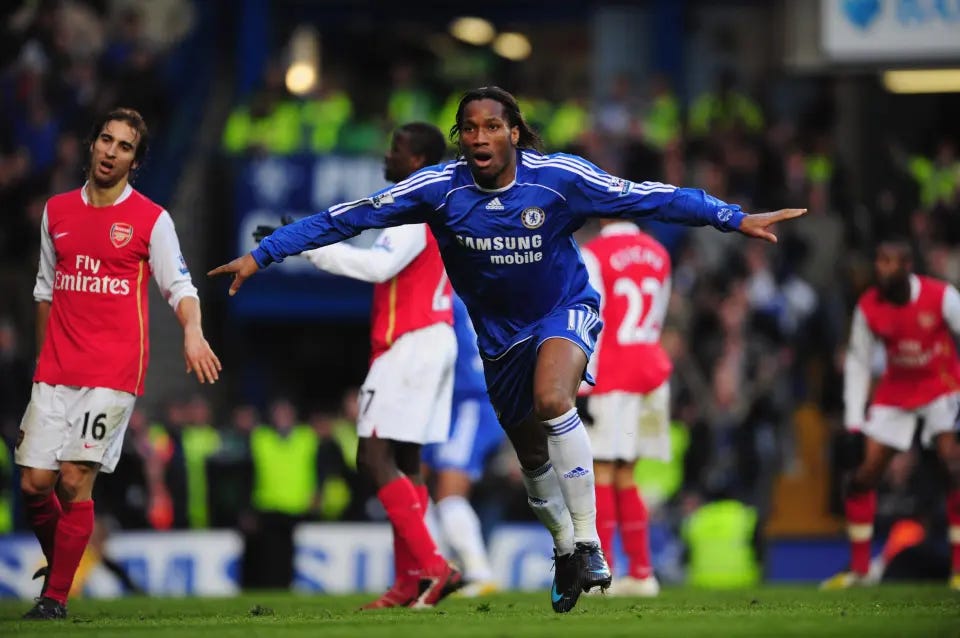
Our take: The Kit Room has a series called Football, With Feeling — no hot takes, no outrage, just honest writing about how the game feels. This installment is about the opponent you secretly respected: the rival player who refused to be a villain because he was simply too good at what he did. Didier Drogba for Arsenal fans. Roy Keane for everyone else. The piece argues that those players don’t diminish a rivalry — they’re what makes it matter. Worth reading slowly, especially during a week when half the country is watching teams they don’t care about and finding reasons to anyway.
THE LISTEN
🎧 The best podcasts we heard this week
Each week, we curate 1-2 of our favorite podcasts from this week. The selections came from our own curation and from submissions by our readers. Thank you so much, and keep them coming.
NBA Draft Show: What you need to know and who you need to watch in the 2026 NCAA Tournament
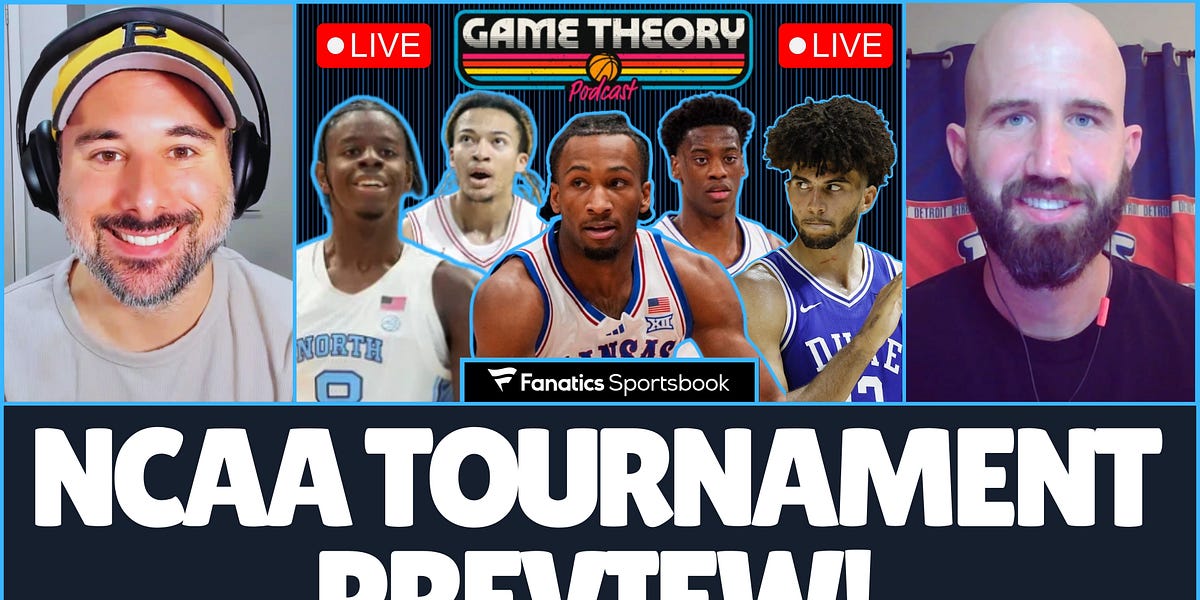
Our take: Most people watch March Madness and see a bracket. Sam Vecenie watches it and sees next June’s draft board. Vecenie, who covers the NBA Draft for The Athletic, teams with Bryce Simon for Game Theory to go region by region through the tournament field — and then keeps going, breaking down individual performances as the games happen and updating their evaluations in real time. If you want a second layer running underneath every game this weekend and beyond, subscribe now and follow along through the whole tournament.
THE WATCH
📺 The best videos we watched this week
Each week, we curate 1-2 of our favorite videos this week. The selections came from our own curation and submissions by our readers. Thank you so much, and keep them coming.
How a Football Transfer is Put Together
Our take: Premier League clubs pay more than £400 million a year in agent fees. Jordan Macaulay of The Long Play spent seven minutes explaining why — and it’s the clearest breakdown of how football agents actually make money, how super agents like Jorge Mendes became embedded in club recruitment, and why the sport’s governing bodies are now scrambling to regulate the whole thing. If a £50 million transfer always seemed too clean a number, this is the video that explains what you weren’t seeing.
THE PRESSROOM
🗞️ Who’s making moves in the newsletter space
Jesse Dougherty didn’t start his Substack because the Washington Post eliminated its sports section. He started it in December 2024 — before that happened — which is a different thing entirely. When the Post made its move, Dougherty already had somewhere to go. This week, with the bracket set and March Madness back in full noise, he went somewhere personal: a decade-old road trip he and a couple of his Daily Orange colleagues took when Syracuse made its last unexpected run to the Final Four, stretching their writing, driving and sleeping arrangements to their limits. It’s the kind of story a staff job rarely makes room for. His Substack does.

THE ROSTER
📋 Some follows to note
We want to celebrate as many independent creators on The Sunday Back Page as possible. Here are all the people who submitted their work for consideration this week. Many of these creators deserved a place in this newsletter, and we hope they continue to submit their work. Please keep them on your radar.
Matt Lombardo | Jeffrey Thompson | Matt McGlinchey | West Ham Fan | The Playbook Post | Isiah Christie | Coaching Care Creativity | Forward Press Formation | Adam Steinmetz | Miller Kopp
Here are some Fantasy Baseball follows: Fantasy Baseball Mindset Musings | Nate Kosher | Shawn Childs | Ben Rosener | Brendan Tuma | MLB Data Warehouse | Peter Kreutzer | Martin Sekulski | John Laghezza
Want to see your independent publication featured here? Let us know.
